
A management team can run without trust. It can hold meetings, track actions, make decisions, and report alignment. On the surface, it can look fine. But underneath, it is stuck. The real questions never get asked. The real issues never get owned. And the work of leading, collectively and honestly, at the level where it matters, is not happening.

Trust does not break all at once. It fades. One hesitation at a time. One avoided conversation. One idea that gets ignored, then remembered as a risk not worth taking. And once it starts slipping, everyone adjusts. People stop telling the truth. Not the big lies, but the small ones. They hold back, not because they are hiding something, but because they no longer know what the room can carry.
You see it in the tone. The surface becomes too smooth. Meetings feel polite, but not productive. Disagreements are hinted at, but never named. People offer updates instead of real input. They wait for the moment to pass. Eventually, they stop expecting the team to do the work of a team.
That kind of trust breakdown is hard to notice in the moment. Especially in management teams, where the surface always looks composed. These rooms are filled with competent people. People who are used to being right. People who carry status, or responsibility, or both. That makes it harder, not easier. Because even when everyone is smiling, there is an undercurrent of judgment. Who is really contributing? Who belongs here? Who is just occupying the seat?
It is not always spoken. But it is always felt.
That anxiety makes trust fragile. If someone is unsure whether they are seen as credible, they are not going to admit uncertainty. If someone feels they are being tolerated more than valued, they will start defending themselves instead of engaging. And if no one in the room is confident the others have their back, the team breaks into individual agendas. Quietly. Automatically.
Some of my most trusting work relationships have begun with real disagreement. I have worked with product managers who pushed for solutions I thought were bloated and misaligned. Technical leads who refused to compromise. Program managers who would not move until every detail was clear. These were not easy relationships. But they worked, because we carried a shared weight. The trust came from knowing that each of us took our piece of the problem seriously.
One project in particular stays with me. She was the product manager, and I was leading production. We were meeting by a whiteboard, just the two of us, trying to work through a priority conflict that had grown worse over the past weeks. At one point it became clear that she had gone ahead on a plan without accounting for the risks I had raised. I was frustrated, not just by the move itself, but by the sense that we were no longer seeing the same problem. I was standing at one end of the room, a box of coloured markers in front of me. In irritation, I started flinging them—not violently, but pointedly—towards the board, and toward her. It was clumsy. It was emotional. But it came from the gravity of the situation, and she understood that.
Please do not worry. I would work with her again in a second. We fought hard toward a shared goal, learned to work with each other, and never went behind the other person’s back. When a decision, and decisions always do, would blow up in our faces, I knew she would not throw me under the bus, and I would not throw her under the bus either. That kind of trust is not soft. It comes from tested ground.
Later in the project, I made a conscious decision to shift how I engaged. I stopped reacting quickly. I decided to listen more fully, to give her position the benefit of the doubt before I pushed back. She was presenting a new idea in one of our later sessions—a complex proposal, with some parts I immediately questioned. But instead of interrupting, I stood silently, working through it in my mind. I was trying to hear the full thing, to catch the angles and the logic, and to make sure I was responding to the right problem.
She noticed. Mid-presentation, she stopped. Then she said, “This is the scariest part of talking to you. When you go quiet. That is when my confidence in the idea starts to break.”
That moment said more than anything. Not because she feared criticism, but because she knew it would come from a place of care and clarity. That kind of trust is not built through words. It comes from pressure. It comes from choosing to stay in the work, together, when it gets uncomfortable. And it comes from knowing, without having to say it, that the work will be shared.
But most management teams never reach that. Not because they are immature, but because they are reactive. When the team is operating on a short cycle, when the pressure is immediate, and the agenda is about keeping control of what is directly in front of them, trust cannot build. Everyone is scanning for the next grenade to jump on. Each conversation becomes about proximity to failure rather than clarity of purpose.
Meetings get filled with status updates, bug triage, and reactive debates that should be left to the people closest to the problem. The conversation becomes tactical, defensive, and exhausting. No one in the room is thinking two steps ahead, because they are too busy trying to survive the current one.
When I work with teams like this, I do not start by asking them to be more honest or more open. I change the cadence. I ask where they are now, where they need to be in six months, and what they are really trying to achieve in three years. That shift matters. Because once people start looking up, once they start seeing the full scale of the problem, something else happens. They realise that it is too big to solve alone. They cannot carry it as individuals. They cannot resolve it inside their own lane. They start asking for alignment, not to be polite, but because they need it. They start testing ideas together because the risk of isolation becomes real. And without forcing it, the team begins to rely on each other again.
That is the structural root of trust. Not emotion. Not affirmation. But interdependence built on the scale of the shared task.
How you know trust is missing
It does not show up as open hostility. That would be easier to deal with. When trust is gone, what you get instead is distance. The room feels quiet, but not focused. People speak carefully. The language is professional, but the energy is defensive. You can feel that everyone is calculating.
People start offering updates instead of opinions. They wait to see where the decision is going before they comment. Feedback is filtered, wrapped in soft phrasing, or delivered through side channels. The big questions never get asked directly. No one says what they are really worried about, because they are not sure what will happen if they do.
Disagreements get deferred. Meetings end with alignment on paper, but no real clarity in the room. A few days later, someone quietly goes in another direction. Or just stalls. And no one calls it out, because everyone is doing their own version of the same thing.
You see it in small moments. Someone raises a risk, and the room moves on too quickly. A plan changes, and no one asks why. People stop following up, because they no longer expect accountability. The group loses grip on its own purpose. Not all at once, but by inches. Not through conflict, but through absence.
A real example: Boeing
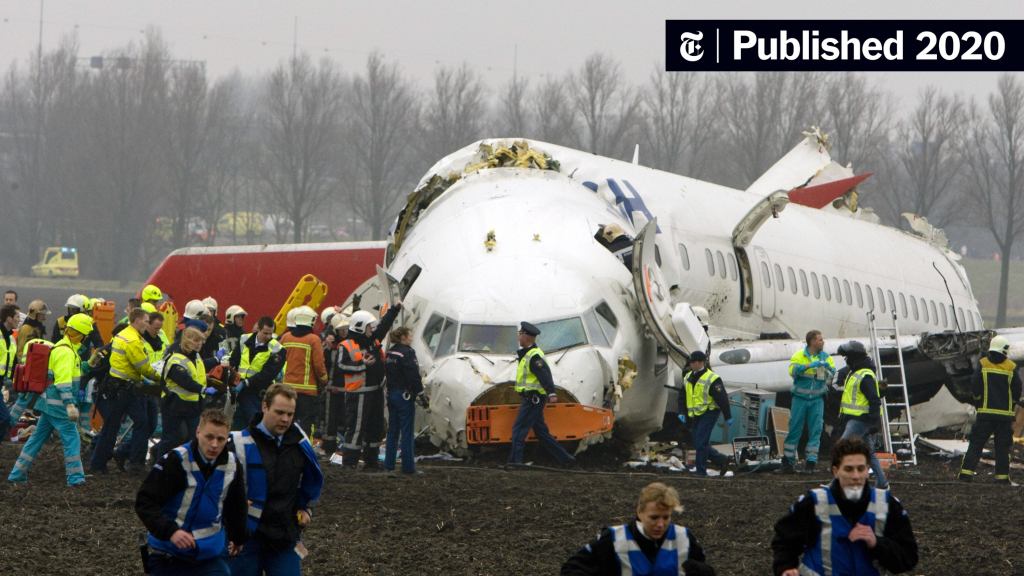
Boeing is a clear case. During the development of the 737 MAX, internal engineers raised safety concerns. But those concerns were softened, sidelined, or buried. No one forced the conversation upward. Leaders deferred to process. No one said what needed to be said in the room where it mattered. Two planes crashed. 346 people died. The company lost billions in value and public trust.
This was not a technical failure. It was a management team failure. The kind that begins with silence and ends in tragedy.
What builds trust
Trust is not built through words. It is built through behavior, over time, and under pressure.
It starts when people show they are willing to speak honestly, even when it is uncomfortable. It grows when they see that honesty met with curiosity, not punishment. It deepens when disagreement is taken seriously, not smoothed over. And it stabilises when people know that mistakes will not lead to betrayal.
It does not mean harmony. It does not mean calm. But it does mean that whatever tension exists in the room can be named, held, and worked through without judgment or fallout.
Leaders who want trust have to go first. They have to listen before defending. They have to be transparent about what they do not know. They have to be willing to ask hard questions and stay with the discomfort of real answers. Most of all, they have to model that the work of the team is not about individual performance. It is about shared ownership of the whole.
Trust builds in that space. When people stop trying to prove themselves, and start acting like they are responsible for something larger than themselves.
That is what defines the room.
For those thinking further
This article stands on its own, but if you are looking to go deeper, these are a few references worth reading.
- Patrick Lencioni – The five dysfunctions of a team
A simple but still widely used framework. Not subtle, but useful when you need shared language for team repair. - Amy Edmondson – The fearless organization
The clearest thinking on psychological safety, and how it directly affects performance, risk-taking, and trust inside teams. - Harvard Business Review – What happens when leaders don’t listen
A short piece that captures the cost of silence inside leadership groups. - McKinsey – The organization blog on executive alignment and team performance
Their materials are dry, but their insights on peer accountability and strategic misalignment are sharp and honest.
Choose what serves you. Leave the rest.

 Development | Portfolio | Innovation
Lämna en kommentar