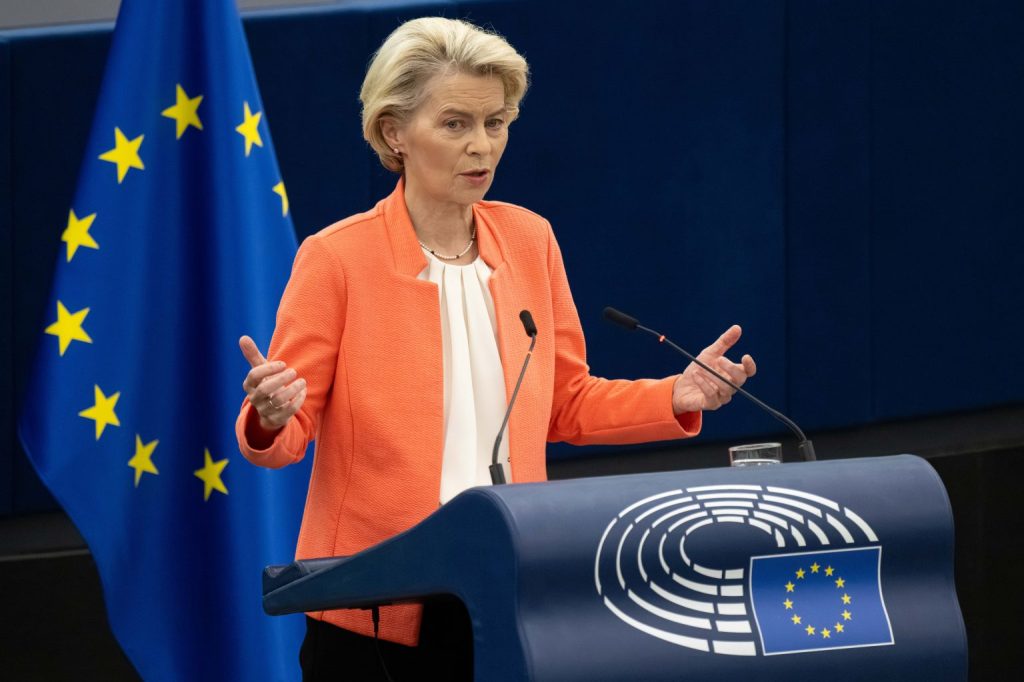
I make no secret of it: I’m a huge admirer of Ursula von der Leyen. I’ve followed her work for quite some time now, and what fascinates me isn’t just the policies or press conferences—it’s how she leads. As someone who studies leadership not just to understand it but to live it, I see in her a kind of clarity and structure that feels deeply familiar.
My scope is much smaller than hers, of course. I’ve never had to unify 27 member states or navigate international sanctions. But the nature of the problem—getting people who don’t want to talk to each other to actually work together—is surprisingly similar.
I’ve led cross-functional teams where Sales wants one thing, Product wants another, and Engineering is deeply invested in something else entirely. Each group sits in its own silo, with its own language, metrics, and culture. And somehow, we need to get all of them to see a bigger picture and act like a single, aligned force. That’s not so different from getting Poland, France, and Sweden to row in the same direction.
This is where Ursula von der Leyen excels: she cannot simply order people to do things. As President of the European Commission, she leads a continent without direct authority over many of the key players. The heads of EU member states report to their own national governments, not to her. She can’t issue commands; she must build consensus, influence, and guide the various stakeholders toward common ground. It’s an indirect form of leadership—one that requires exceptional patience, communication, and political skill.
Take her response to the energy crisis triggered by the war in Ukraine. Different member states had wildly different dependencies on Russian gas, different economic constraints, and different political pressures at home. And yet, under her leadership, the EU managed to coordinate joint gas purchases, implement a price cap mechanism, and even start reforming the electricity market. That’s not magic—it’s leadership. Structured, methodical, strategic.
But what really stands out to me is how Ursula navigated the highly controversial and emotionally charged issue of European defense. It’s a deeply divisive issue—one that stirs up distrust and anxiety across member states, each with its own historical context and fears. But in her leadership, Ursula managed to unite 96% of Europeans behind a rearmament plan. Not because anyone was bamboozled, but because the purpose was crystal clear: to protect Europe’s values, independence, and collective security in a rapidly changing world. Her leadership brought the emotional complexity down to a single, clear goal—and that’s something only the most disciplined, focused leaders can do.
And this is where von der Leyen’s true strength lies. Not only is she incredibly disciplined, but she has an unparalleled ability to clarify even the most complex, divisive challenges and make them actionable. She doesn’t just lead in words—she leads through clear, strategic, and deeply considered action. This ability to create alignment, even in chaos, is what sets her apart.
I’ve seen a version of this kind of leadership in my own career. Once, I was handed a product slated for shutdown. The teams working on it were demotivated, internal conflicts ran high, and there was little hope that anything good could come from it. The product had become a vipers’ nest—no one believed in it, and everyone was at odds. But instead of letting it go, we took a step back. We started building a clear vision for the product’s potential, talking to people across teams, and engaging them by asking: What if we can turn this around? What if this product has more value than we think?
We were met with resistance from every angle. But we kept the vision clear. We made sure everyone understood why it mattered. Slowly, we got the support we needed, and what was once a failed product became a multimillion-dollar success. It wasn’t through force. It was through clarity, purpose, and relentless alignment around the goal. Just like Ursula, we didn’t let the noise derail us. We knew what we were trying to achieve—and so did everyone else.
Leadership isn’t about knowing best. It’s about knowing what matters—and helping people gather around that. That’s what Ursula does on a European scale. That’s what I try to do in my own corner of the world.
And I’ll be honest—when things get chaotic, when goals are unclear, or when teams start drifting—I sometimes ask myself: what would Ursula do?
Usually the answer is: stay calm, clarify the goal, invite everyone back to the table.
But here’s the real challenge: when it’s your turn to lead, will you have the courage to stick to that? Will you hold the line, even when it’s hard? Will you gather people together, not through power, but through purpose?
That’s the kind of leadership I’m striving for.

 Development | Portfolio | Innovation
Lämna en kommentar